Showing posts with label Corporate Shenanigans. Show all posts

Thursday, July 22, 2021

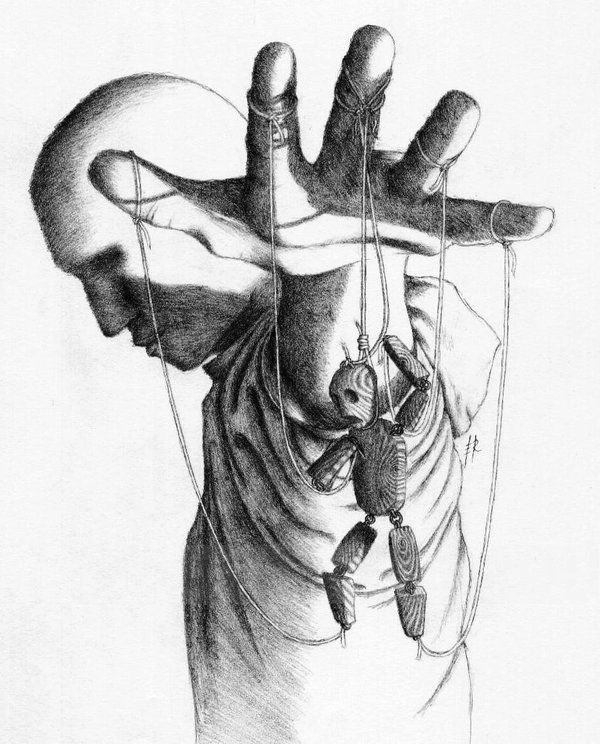
Storytelling, Corporate Agendas and the Fate of the Multiverse

   We invest a lot in stories.  They entertain us, sure, but they also help us shape ourselves and our understanding of the world.  If they’re the things we make ourselves out of, they ought to be made of good stuff.

    Storytellers invest a lot in shaping those stories.  Yes, it’s a way to make a living, but the storytellers who really care know that they’re helping to build identities and worldviews, asking questions and offering possible answers.

    Corporations invest a lot in stories.  They’re a crucial part of the package they label with the unease-inducing generic term “content.”  The better the stories are, the more people will watch them, so there’s a reason to make them good.  But for the corporations, the investment is mainly a financial one, the foundation of what Mike Hale of the New York Times referred to as the “narrative-industrial complex." 

    We’re in an age where a certain kind of story has taken over: the overarching, infinite serialized mythology.  For corporations, this is the best kind of product possible.  For storytellers, it’s got unique, exciting opportunities, but also dangerous, frustrating pitfalls.  For the audience, it’s potentially a whole new level of attachment, for better and worse.

    The artist struggles to tell a story they actually feel.  That’s how you connect with other people and get people to connect with each other through the stories.  The corporation has a plan, a determined structure to the overstory, of which any particular storyteller’s part is only a small piece.  The artist struggles to tell a story they feel.  The corporation needs a story that fits.

    In Star Wars Episode VIII: The Last Jedi, Rian Johnson sent the Star Wars mythology spinning off its axis with a more idiosyncratic and personal tale that departed from the established lines of expectation, from those emotions already contained within the overstory.  This made fans queasy at first, buts seems to be widely lauded in retrospect.  Things happened in The Last Jedi that surprised us in a way that Star Wars movies hadn’t before (or at least not since The Empire Strikes Back).  Now admittedly, Johnson wasn’t working in a vacuum (so to speak).  Whatever he did ultimately required the approval of Disney and its arbiters, in this case, producer Kathleen Kennedy.  Now, maybe Kennedy saw the value of letting a young rebel go for a joyride, narratively-speaking, and how it could jump-start a kind of excitement and emotion that had been static.  Maybe she also knew that they still had an episode to go and any damage done could be rectified.

    And, of course, the addendum to this is that J.J. Abrams “corrected” the narrative course in Star Wars Episode IX: The Rise of Skylwalker.  Feeling more beholden to what he saw as the overarching theme of the three trilogies, the overstory, he determined that certain expectations had to be met and that the themes of redemption and facing your dark side had to rise to the top of the tale.  Was he right?  The first trilogy was about a fall from grace, which you could say was a set up for redemption.  The second trilogy turned out to be about redemption (thanks, Return of the Jedi).  Seems like the third trilogy was really up for grabs in that regard and Abrams imposed his interpretation on it (along with the assistance of Disney and Kathleen Kennedy).  Even had he not gone back and canceled out much of what Johnson introduced, he could still have played out those themes through the character of Kylo Ren and let Rey blaze a frontier into new, powerful thematic territory.  Abrams does strike one as a company man and he seems to have held the company line, here.

    In season 1 of Loki, meanwhile, creator Michael Waldron crafted a natural story for the title character that ultimately funneled into an unnatural place, as if his directions had been to tell whatever story he wanted, as long as it ended with certain very specific pieces in place.  Thematically-speaking, the ending the first season of Loki seemed to be driving toward was something on the order of having a final, ultimate Loki variant revealed as the cosmic manipulator behind the Time Variance Authority.  The entire show was about Loki facing down and owning up to the various versions of himself, struggling with the false ambition of himself “on a throne.”  But when we finally get to the figure sitting atop the throne-iest throne of all time (literally), it turns out to be . . . some scientist from the 31st Century we’ve never seen or heard of before?  Yes, comic book readers know him and audiences will certainly get to know more of him and his machinations in the future (that’s the whole the point, after all), so Marvel is setting its ducks in a row very carefully.  But I do wonder if Waldron would have grown Loki’s narrative into that conclusion, had he been permitted to follow his storytelling instincts. 

    There’s a joy in a story that we know is going to keep coming, characters and worlds that we get to return to over and over and over again.  But sometimes, we need a story to end so we can fully understand it and use it to understand ourselves; so that it actually satisfies us instead of just leaving us wanting more.  What is a storyteller?  What do we expect from them and what do we need from them?  Surely more than just turning out "content."  What’s good for the product is not always good for the story.  And good stories are good for us.

Thursday, August 27, 2020

What Puts the Evil in Evil Geniuses?

      Evil Geniuses is Kurt Andersen's work of (recent) historical and analytical journalism.  It seeks to recount and explain how a group of very wealthy conservatives used their money to alter the public consciousness and influence politics to bolster their own profits, and in so doing set the country on a path of social, economic and climatic ruin.

     In his review of the book for the New York Times Book Review, Anand Giridharadas discusses how Andersen closes the book on a note of hope (I suppose you'd technically call this a spoiler, but I doubt anyone's reading this book for a shock ending).  Just as the conservatives stole the world out from under the liberals back in the 1970s, when liberal power appeared to be at its height, so too can the liberals now take back that power and steer the country away from destruction.  They must, Andersen suggests by way of Giridharadas, simply use the same cunning, the same manipulation, the same power-grasping practices that were once -- and continue to be -- used against them and the rest of us.

     But here's what worries me.  What if it's the abandonment of self-limitation, the willingness to steamroll over everything else in order to get what you want that is the actual problem?  Granted, we are not in a good place right now and granted the liberal route is far preferable in terms of both humane existence and just plain old survival.  And granted, the methods they are currently using have not seemed sufficient to the enormity of the task.  But what if, in doing ANYTHING you need to in order to win, you become something different than you were, and the extreme level of power you wield simply sends us toward ruin, just a different kind at the other end of the spectrum?  What if how you do something is just as loaded with consequences as what you do?

Thursday, February 21, 2019

Must Writers Be Moral or Just Profitable?

     The New York Times recently ran an op-ed piece titled "Must Writers Be Moral?" focusing on the recent trend of publishers adding a morality clause into their writers' contracts.  This stipulates that, should a writer become the target of a scandal that could damage their sales or readership numbers, publishers are released from the contract and no longer have to publish the work as agreed.
     There are plenty of heady issues to address here and the piece engages with some of them.  One that it doesn't touch on is this: publishing companies don't care if writers are moral or not, they only care if writers endanger the profit margin.  This clause isn't saying writers mustn't act immorally, only that if they get caught for doing something (or get blamed for doing something they didn't actually do, or even traffic in ideas that are too controversial for the company), then they suffer the contractual consequences.   
    In a capitalist society, money is how we enforce morality, which seems dangerous for many reasons, not the least of which is that it allows profit to trump the the free exchange of ideas.

Thursday, January 7, 2016

Awakened

     Regarding a post from just before the release of Star Wars: The Force Awakens: bravo to everyone involved, though most directly actress Daisy Ridley and director and screenwriter J.J. Abrams.  If art can be a force for social change, then they just set off an atomic bomb of gender role subversion in the middle of the biggest blockbuster in mainstream Hollywood history. 

Thursday, December 4, 2014

50%

     A few weeks back, I mentioned the dispute between Amazon and the publisher Hachette.  As you may already be aware, this dispute has been settled, with the publisher receiving a reasonable portion of the e-book profits it was asking for (at least as far as I understand it).   This is good news, of course.  It's hard to debate a publisher's desire to share equitably in the profit from their own product.  The settlement is being hailed as an important one for publishing in this country.
     What the settlement does not address is this: Amazon is a single corporation currently in control of fifty percent of the book market in America.  Now, Amazon is, among a vast array of things, a smart company providing a useful, highly-valued service.  We are a capitalist country and much of what we are entitled to here is measure by success.  Does Amazon's success entitle them to this kind of control and what, exactly, does this kind of control enable them to do?             

Thursday, October 2, 2014

Authors United

          As most people reading the blog of an author probably know already, the website Amazon and the publisher Hachette are currently in a dispute that on the surface is about e-book pricing, but in fact speaks to the much larger matters of monopolies and censorship.  For a full explanation of this issue, just click the link a few lines above.  To see what a large group of authors have banded together to do, under the name of Authors United, have a look here.
    

Thursday, May 22, 2014

No Windows

     The AT&T Long Lines Building in Downtown New York City has no windows; none at all.  It houses a great deal of communications technology, but aren't there any human beings in there?  If not, that's troubling in its own right; a whole building with nothing but machinery working away?  But if there are people in there, what are they doing all day with no natural light, no outside air directly circulating through.  It must be like working in the subway, yet the fact that it's a skyscraper makes it all feel somehow eerier. 
     There's some purely practical reason there are no windows in that place, no doubt, but it begs a story to be told: something we're not supposed to see in there, or something in there that's not supposed to see out.

Thursday, April 3, 2014

The Town That Wasn't

     If you think about it, maps could be pulling a vast hoax on us.  How many of those places we pass by do we ever actually visit?  How many little towns, villages and hamlets whip by us on our way to somewhere else that we never see?  There's story potential here: a map filled with the names of imaginary places meant to convince some poor traveler that the world isn't actually empty.  But it appears that reality beat fiction to it in this case.  This recent article from The New York Times explains how the town of Agloe, New York has appeared for decades on road maps and even inhabited a spot in the digital world of Google Maps, all without ever really existing.  Theoretically included on maps as a protection against copyright infringement (if the name appeared on other maps, the owners would know information had been lifted from the Agloe-inclusive map, since these other map makers would never have come across an Agloe to include it), it certainly manages to pique the imagination.
    An amusing footnote: the print version of this article appeared in the March 29, 2014 edition of The New York Times.  It ends at the bottom of page A16 with the words "Last week, a reporter for the New York" and then explains "Continued on Following Page."  But on page A17, there is no sign of the continued article.  The story has, like the town itself, disappeared.

Thursday, March 6, 2014

The Sameness

    Both as writer and reviewer, I am familiar with the practice of taking an excerpt from a review and putting it on the cover of a book.  Sometimes it's just a word ("spectacular") or a generic thought ("I couldn't put it down," "a real page-turner"), sometimes it's a bit longer and more specific ("fluid writing and thoughtful characterizations help make this a captivating read").  At any rate, the motive behind the cover excerpt is clear and relatively unassailable (from a marketing perspective, at any rate).  But often enough, the chosen excerpt (and not generally chosen by the author, I might add), focuses on how the work in question is just like something else.


     The quote on the cover of the paperback edition of Those That Wake, for example, is "[Karp's] Global Dynamic smacks of Asimov's psychohistory while the entire tone seems like something out of Philip K. Dick."  Now, the review this came from (School Library Journal's) also included phrases like "Karp has created a terrifically gloomy set and peopled it with ... very real characters" and "plenty of action, challenging ideas, and bizarre antagonists" and even "should appeal to a broad section of teens."  Other reviews (like Booklist's), meanwhile, even went so far as to say "intriguing, original and thought-provoking."
     A quote from a review I wrote for Booklist for the book Pang, the Wandering Shaolin Monk Volume 1 by Ben Costa appears on the cover of Volume 2 and reads "Usagi Yojimbo if illustrated by Art Spiegelman," referring to two other names in the comic book galaxy that potential readers are likely to know.  This was chosen from a review that included such possible excerpts as "a charmingly human character" and "astonishingly animated action sequences."  My book and Mr. Costa's are, of course, just two examples from a much larger pool. 
     While it is surely flattering to be compared to the likes of Asimov, Dick, Sakai (creator of Usagi Yojimbo) and Spiegelman, and while such comparisons are fair enough and might be helpful in a review (I did, after all, make the comparison in the first place), what I'd like to call into question is the idea that the work's similarity to another is the most salient, positive or helpful thing you can say about it.  I mean, if you're going to focus on one thing to support the fact that this is a worthwhile piece of work and to attract new readers, is the very best you can do to say that the work in question is just like something else?  This seems rather cynical to me, highlighting sameness, rather than distinctiveness, or even just general quality.  Is that all we're looking for as readers, something that is comfortably familiar?

Thursday, September 26, 2013

A Drinking Problem

     Dasani bottled water, bottled and distributed by the Coca-Cola Company, includes as one of its listed ingredients salt.  It notes that negligible amounts of this are added for taste purposes and, though sodium is a primary constituent of salt,  the nutritional information on the label lists the sodium content as 0%.  Make of this what you will, but it does introduce a fascinating (or is that really the right word?) idea: water that makes you thirstier when you drink it.

Thursday, February 7, 2013

Airlies

     Did you know that many airlines now tack on thirty to forty minutes to their flight time estimates?  Their statistics of on time take-offs and arrivals were getting so bad that they decided to covertly lower our expectations by telling us the flights would be longer than they actually need to be.  So, if you pull away from the gate and end up taxiing on the runway for a half an hour and are still, somehow, miraculously on time, it is not because they made up the time in the air.  It is because they kind-of, sort-of didn't exactly tell the truth to begin with.
     It's still faster than taking the train or the bus, naturally, but there's something about slipping that in without simply telling their customers they were doing it or why that smacks of the old corporate secret-world-domination agenda. 

Thursday, September 13, 2012

How Sweet It Isn't

     Perhaps it is fairly common knowledge that obesity, diabetes and heart disease are on the rise in this country.  Perhaps it is also common knowledge that one of the leading causes of this is sugar consumption.  What I didn't know until recently is that about 80% of commercially-produced foods contain sugar or its latter-day replacement high fructose corn syrup.  We love sweet stuff and the sweeter stuff is, the more we buy and eat it.  So why do we love sweet stuff so much?
     As with just about everything else to do with our physical proclivities, the love of sugar is in our genes.  We are encoded to love sugar because there is no (and has never been) an acutely poisonous food on the planet that is sweet.  Essentially, we are evolved to feel that when a food is sweet, it's safe to eat.  This, of course, comes from millenia past, when you couldn't possibly eat enough sugar to make you overweight (since it was only really available in fruit).
     So what's happened here is that corporations that produce food have tumbled to this genetic fact and now make things sweeter because they know we'll want more of them.  They are using our instinct for safety against us, to feed us something that is increasingly dangerous.
     You can learn a great deal more from Robert Lustig, an expert on this subject, who gives a fascinating interview about it here.  Learn more about the dangers of high fructose corn syrup and other corn-derived products in a highly engaging graphic presentation available here and created by www.LearnStuff.com.  

Thursday, December 29, 2011

Lecturing/Yelling

     I read Empire of Illusion: The End of Literacy and the Triumph of Spectacle by Chris Hedges.  Discussing the rise of a corporate-run entertainment culture throughout nearly every walk of life, designed to lull America into consuming more and thinking less, Mr. Hedges presented a disturbingly convincing argument that suggested we are basically headed for the end of the world (as we know it and want it).  To calm myself down, I grabbed a couple of books on the opposite side of the ideological fence, just to balance the input I was getting.  So I read some Glen Beck and some Ann Coulter.  The irony is that they, too, were basically predicting the end of everything good and worthwhile, but blaming different people for it.  Is that the nature of ideology?  Is it ultimately just about who you blame?
     Reading Mr. Hedges' work, fiercely intelligent and well-researched, I often felt like I was being lectured at.  Reading Mr. Beck's and Ms. Coulter's work, both fast-paced and enthusiastic, I often felt as though I was being yelled at.  I mentioned this to someone and she summed it up rather elegantly, I thought.
      "That's because," she said, "liberals always think their party is smarter than it is and conservatives always think their party is dumber than it is."
      I wonder, would any of us make any progress if we tried lecturing more to conservatives and yelling more at liberals?

Thursday, October 20, 2011

Occupy Wall Street

     I applaud the Occupy Wall Street protestors and their growing cohorts around the world.  I absolutely and one hundred percent believe in what they are saying and their right to say it as loud as they can (without hurting anyone, of course).  Incidentally, it's also nice to see the the once utterly obscure Zuccotti Park (which I used to live next to) suddenly become the focal point of a worldwide movement.
     But I'm deeply dubious; not of anyone's motivations or commitment which are all proving to be quite clear and strong.  I just wonder if we have come to a point in history where this kind of action can no longer have the lasting effect that it needs to.  Once upon a time, this was how you affected change -- where would the 1960s have been without it?  But our attention is so diffracted, our wealth so concentrated, our laws so lenient, I don't know if the raised voice of humanity can topple the corporate walls any longer.  Clearly, public sentiment is not sufficient reason to get corporations to change how they do business.  For things to genuinely change the way they need to -- the way the protestors want them to -- we need an array of regulatory laws drafted the likes of which have not been seen, or even considered, since Ronald Reagan blew them to Hell.  This means that government has to respond to the outcry and be able to wriggle out from under corporate pressures to draft such laws.  Given that government interests and corporate interests are so inextricably wound together now and that the corporations will claim that such regulations will mean huge shut downs and mass relocation of factories to places that will prove less costly and that this will all inevitably lead to massive job cuts . . .
     I want to believe that our voices make this big a difference.  I want to believe that enough people, banding together can change the world.  I want to believe.  I just need some proof.     

Thursday, August 4, 2011

Cold

     Shopping for a new refrigerator, my wife and I found that the one with the smaller dimensions we need (we have a very narrow kitchen) is nearly a thousand dollars more expensive than larger models.  We ask why this is.
     "Well," says the salesman, with quiet sympathy, "the companies always charge more for non-standard sizes."
     "Yes," we say, "but the one we need is smaller."  This means, unless my understanding of physics is quite off, that it requires less material to construct and that there is less room inside it, thus it is actually less useful.
     "Doesn't matter," the salesmen replies.  He's explained this before.  "It's non-standard."
      In thinking long and hard about this, I am left with two possibilities: 1) the companies mass produce standard size pieces from which they construct most of their refrigerators, thus using non-standard pieces (whether they are smaller or larger) actually costs them more.  2) Companies can call anything they want "non-standard" and charge more for it.
     One choice is obviously more heinous than the other and, of course, there could be another reason I'm overlooking.  In any case, practically speaking, we (and you and everyone) must pay more (way, way more) to get less.
     This cannot possibly be the only instance of "non-standard" price difference discrepancies in all of manufacturing.  I'm almost scared to find out. 

Thursday, April 14, 2011

The Carbonated Beverage of Tyrants

     When I was a kid one of the things I enjoyed most about traveling with my parents, was seeing the culture of other countries as depicted in their the media, their advertisements, their products.  One thing that was available in many other countries but not in the United States (at least not when I was younger) was the soft drink Fanta.  I remember those bright orange Fanta swooshes hanging outside of stores along unfamiliar streets and my young palate would tingle at the idea of an orange Fanta.
     So, here's what I've learned about Fanta since then.  Back during the build up to World War II, the Coca Cola Company was finding it difficult to get their product into Germany, both for logistical and political reasons.  Losing those sales would have been a huge blow to Coke's profit margin, so a new soda was developed to market in what quickly became Nazi Germany.  Coke could keep their profits but wouldn't have a great American product associated with a such an undesirable quantity.  The drink: Fanta.  One more warm memory of childhood blown to smithereens.
     That, of course, is the tip of the iceberg when it comes to media manipulation.  Don't even get me started on the Betty Crocker story.  It's hard these days to pick up a product, to see an ad or a TV show or a movie without wondering what you're being sold that you're not even aware of.
    So there's something fun to think about.  If the subject interests you, allow me to recommend and fantastic documentary called The Century of the Self, which is all about how corporations adopted psychological theory to help them present a palatable, inviting messages (and, incidentally, contains both the Fanta story and the Betty Crocker story).  Now what is the documentary trying to sell me that I'm not aware of?  I'm not sure, but I think I'd like it better than the other stuff.

Thursday, March 24, 2011

Barnes and Noble and Me

     The publishing date for my book Those That Wake hit a couple of days ago (March 21st to be exact).  Naturally, I went to the largest bookstore in my area (a Barnes and Noble, of course) to get a gander at it sitting on the shelves with all those other real books by real authors.  Wasn't there, though, so I inquired of the lady at the information desk.  Not in stock, she told me.  Do any other Barnes and Nobles in the area have it, I ask.  No, she says, no Barnes and Noble in New York City has it in stock.
     I do some looking around on the Barnes and Noble website, checking my book's availability at various stores around the country.  It's not in any of them.
    Now, I'm very pleased to say that Those That Wake is available from various online sources including, might I add, the Barnes and Noble website.  I'm also very happy to say that I have seen it on the shelves of a few smaller, independent bookstores.  I have also, by now, spoken to the various powers that be and I am told that Barnes and Noble does plan to stock my book.  When?  Can't say.  Why haven't they yet?  That's what I'm wondering about.  As difficult as it is being beholden to a corporate giant, they are the biggest book seller in America.  Also, while I am a bit paranoid (or so my friends and those who have read my book tell me), I am not so far gone that I feel like my book is the only book this has ever happened to.  It just makes me wonder why Barnes and Noble has gone this way.  Rather than projecting reasons (including that it could, of course, just have been a simple slip up), I'll simply suggest that there are lots of things that corporations are deciding for us, about what we get to see and when, that we know nothing about.  Whether you have a direct, vested interest in this (as I admittedly do) or not, the idea that these decisions might be getting made for us seems worth mulling over.
     At any rate, if you are interested in reading Those That Wake, please have a look at your nearest independent bookstore.  If there isn't one near you, some of them are online and are happy to ship to you -- like this one.  Heck, you could even do that after Barnes and Noble has it on their shelves, too.
     Meanwhile, speaking of independent bookstores, I'm due for my first public appearance, on a YA author panel, at New York City's Books of Wonder on Saturday, April 2nd from 12-2 pm.  If you're in the area, please drop by.

Thursday, January 27, 2011

Finding Books

     As I watch my publisher design strategies (and participate in efforts myself) to get the name and sense of my book to the public, I come to wonder how we find the the books we read these days.  I don't mean when we know the book we want, how do we get it, but rather how do we discover new titles and new writers?  How do we find that astonishing read which comes from out of nowhere and brings unexpected joy with it?
     Advertisements in public places are generally reserved for authors who are already massively popular.  Browsing in bookstores is always fun, but you need a bookstore near you and the time to pick through the offerings.  Also, with corporate megaliths dominating the bookstore world, it's easy to feel as though your tastes are being guided to some extent by the prominence of book placement within the store and other below-the-conscious-level marketing techniques.  Amazon, though difficult to really browse through, has no shortage of offerings and they even recommend titles similar to ones they know you like.  On the other hand, this strategy can be somewhat limiting, and there's nothing quite like holding a book in your hand and flipping through it to see whether or not there's a connection.  There are websites for every taste (not unlike the one you're on right now), but you have to seek them out for the most part and they tend to concentrate within particular genres.
     What I'm driving at here is a hope that books are still discovered by word of mouth, that a friend can sometimes drop something into your lap that you never would have come by yourself but suddenly and completely changes your reading life.  A friend noted a book to me the other day, based on the fact that it had the creepiest cover he had ever seen (click on the image above for a better look -- it's worth it).  I had a look and hunted down a copy for myself.  I haven't read it yet, but I'm very excited.  The creation of a story, at its best, is an incredibly personal experience that is meant to spark something similarly personal in readers.  It would be lovely to think that such a personal connection could travel all the way through the process.